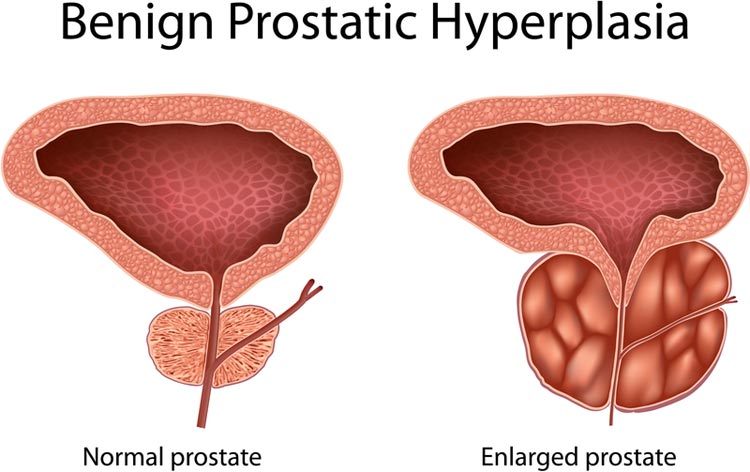
Prostate Enlargement, also known as Benign Prostatic Hyperplasia (BPH), is a common condition in men, especially those over 50 years old. It occurs when the prostate gland grows larger, pressing against the urethra and causing urinary problems. BPH is not cancerous but can significantly affect quality of life.
The exact cause of BPH is not fully understood, but several factors contribute to its development:
Doctors diagnose BPH through a combination of:
Medical history & symptom evaluation.
Digital Rectal Exam (DRE) – To check prostate size and texture.
Prostate-Specific Antigen (PSA) Test – Rules out prostate cancer.
Urine Tests – Detects infections or other conditions.
Ultrasound or MRI – Checks prostate size and bladder function.
Uroflowmetry & Post-Void Residual Test – Measures urine flow rate and bladder emptying.
The treatment approach depends on severity and impact on daily life.
For moderate to severe cases that don’t respond to medication:
Regular prostate screenings (especially after 50).
Healthy diet – Rich in vegetables, healthy fats, and whole grains.
Stay active – Exercise helps maintain a healthy metabolism.
Avoid holding urine for long periods – Can weaken bladder function.
Most men manage BPH effectively with medications and lifestyle changes. If symptoms worsen, minimally invasive treatments or surgery can offer long-term relief.
Would you like recommendations on natural supplements, exercises, or dietary changes for prostate health?