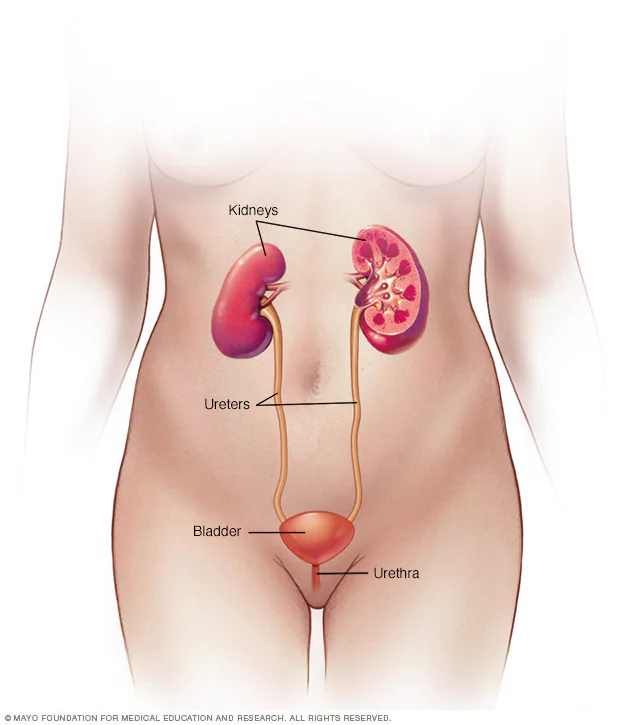
A Urinary Tract Infection (UTI) is a bacterial infection that affects any part of the urinary system, including the bladder, urethra, ureters, or kidneys. It is more common in women but can also affect men.
🔹 Bacterial infection – E. coli (most common), from the digestive tract entering the urinary system.
🔹 Poor hygiene – Wiping from back to front can spread bacteria.
🔹 Holding urine for too long – Allows bacteria to multiply.
🔹 Sexual activity – Can introduce bacteria into the urethra.
🔹 Weakened immune system – Diabetes, pregnancy, or chronic illnesses increase risk.
🔹 Dehydration – Not drinking enough water reduces urine flow, allowing bacteria to grow.
🔹 Urinary catheter use – In hospitals or bedridden patients.
Frequent urge to urinate
Burning sensation while urinating
Cloudy, dark, or strong-smelling urine
Lower abdominal pain
Burning sensation while urinating
Discharge from the urethra (more common in men)
High fever & chills
Back or side pain
Nausea & vomiting
Blood in urine
Urine test (Urinalysis) – Checks for bacteria and white blood cells.
Urine culture – Identifies the exact bacteria causing the infection.
Ultrasound or CT scan – If UTIs are frequent or severe.
Antibiotics – Ciprofloxacin, Nitrofurantoin, Trimethoprim-sulfamethoxazole (doctor prescribed).
Pain relievers – Phenazopyridine (Pyridium) for burning sensation relief.
Drink plenty of water – Helps flush bacteria out.
Cranberry juice – May prevent bacterial adhesion to the bladder.
Urinate frequently – Don’t hold in urine.
Wipe from front to back – Prevents bacteria spread.
Wear cotton underwear & loose clothing – Keeps the area dry.
Avoid irritating substances – Perfumed soaps, douches, or bubble baths.
🔹 If symptoms don’t improve within 2 days.
🔹 If there’s blood in urine or severe pain.
🔹 If you have frequent UTIs (may need further tests).